No matter how engaging your emails are, some subscribers will still disconnect. And that’s okay! It just means it’s time for you to give subscribers one more chance to connect and then let them go.
Just like you expect friendships to go both ways, your relationship with your subscribers shouldn’t be one-sided. If you constantly barrage a subscriber with emails and they never respond or engage, it’s time to say goodbye. You’re no longer in a relationship with them, wasting space on your list and dragging down your metrics.
When you’re ready to re-engage, consider this data we gained from our respondents about how they engage and interact with re-engagement campaigns.
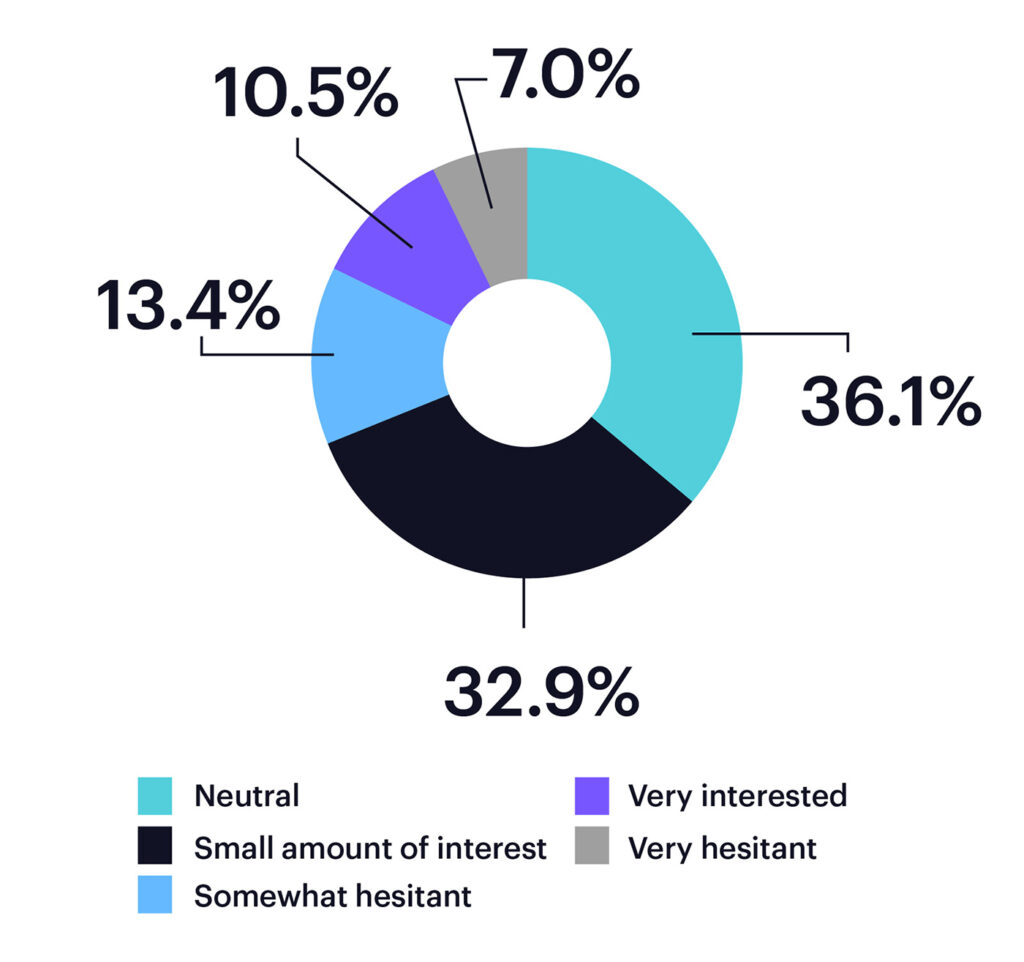
What are the top two reactions from customers who have not heard from you in a while?
Consumers have either neutral feelings (36.1%) or a small amount of interest in what companies had to say (32.9%).
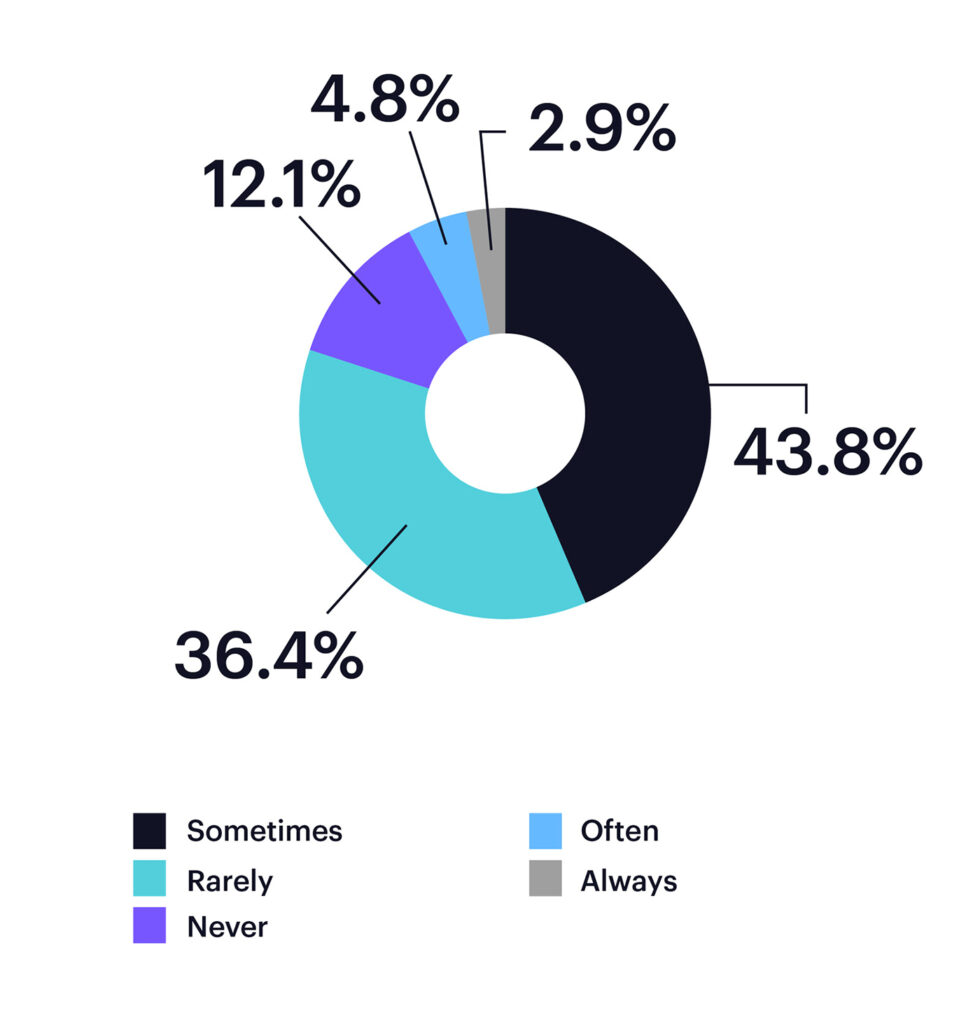
How often do respondents make a purchase from a re-engagement offer?
43.8% chose sometimes, 36.4% said only rarely, 12.1% chose never, 4.8% said often, and finally 2.9% said always.
What percentage of re-engagement emails motivated customers to purchase from restaurants?
45.7% of consumers said they made a purchase within the restaurant industry.
How are consumers most likely to react when hearing from a company they haven’t heard from in a while?
Most consumers have either neutral feelings (36.1%) or a small amount of interest in what companies had to say (32.9%).
Meanwhile, 13.4% of are somewhat hesitant and 10.5% say they’d be very interested. Only 7.0% said they’d be very hesitant about interacting with a brand they hadn’t heard from in a while.
Insight
This data should encourage you to be consistent with your email marketing. Alternating between seasons of minimal sending and sending with a high frequency can backfire if you can’t sustain that kind of cadence.
Sometimes things happen that might make it impossible or at least very difficult for you to maintain your email marketing frequency, and your messages drop off. When you reach back out to the contacts on your list, be transparent to overcome their hesitation.
Explain where and when subscribers signed up for your list so they know you aren’t spamming their inboxes and let them know, as best you can, what happened to cause your drop off in sending frequency. Your transparency and honesty might not win back everyone who receives your re-engagement campaign, but you will certainly impress them all and win back more than you would have by pretending nothing happened.
Get started with iLoyal Email Studio
Plans that flex to your needs and budget. Do it yourself or ask iLoyal for help with templates, graphics, list management, and more.
What about offering a discount, special deal, or incentive to come back and purchase again?
Only 72.6% of consumers have said they have ever received a re-engagement campaign.
Insight
If only 72.6% of people receive a re-engagement campaign, that’s over a quarter who disconnected from a brand and didn’t re-engage. While not all 27.4% would re-engage with a company, many of them would have if given the chance.
If you aren’t running re-engagement campaigns that offer incentives and pull out all the stops to bring subscribers back into the fold, you’re leaving revenue on the table.
How many re-engagement emails have they received in the last month?
These are the top 5 responses we heard from respondents:
- 19.2% said they received 2 re-engagement emails in the past month
- 17.6% said they received 3 re-engagement emails in the past month
- 13.7% said they received 10+ re-engagement emails in the past month
- 13.4% said they received 1 re-engagement emails in the past month
- 11.8% said they received 0 re-engagement emails in the past month
Insight
While some consumers receive a lot of re-engagement campaigns—more than ten—there is an almost equal amount of subscribers who received only one. And the majority of respondents only received between zero and three.
Clearly, re-engagement campaigns shouldn’t be run too frequently, but there’s room for an increased number of emails focused on re-engagement in people’s inboxes.
Look at the success rate of your re-engagement campaigns and see if your list would benefit from sending them more frequently. Perhaps you send a campaign to re-engage subscribers before you send out the pull-out-all-the-stops campaign. This light re-engagement campaign could send another discount code, or maybe just feature user reviews. The content you include will depend on your industry and your audience.
How often do consumers make a purchase because of a re-engagement offer?
12.1: Never | Rarely: 36.4% | Sometimes: 43.8% |
Often: 4.8% | Always: 2.9%
Insight
Re-engagement offers can clearly bring subscribers back to your website. However, our data shows that it might be a hard sell to ask these unengaged subscribers to immediately jump back into buying.
While it’s wise to provide the option and incentive for this segment to buy, your re-engagement campaign might be more effective when the goal is to increase engagement, not encourage a conversion.