The average number of people who see posts on social media that aren’t backed by ad dollars is low. It’s no secret that most social platforms operate on a pay-to-play model for brands.
On Facebook, the average reach of an organic page post hovers around 5.20%. That means roughly one in every 19 fans sees the page’s non-promoted content. The easiest way to boost distribution and direct sales is to boost your ad budget.
As a result, businesses often underestimate the importance of organic marketing. But organic social is the foundation that your ad strategy rests on. Behind every successful ad campaign is a consistent and creative social media presence that strengthens brand, relationships, and trust.
1. Learn Best Practices for Each Platform
Having general knowledge of how to write a caption or how to create a video is good. Knowing how to write a good caption for Instagram and create videos for LinkedIn is better
Never take a one-size-fits-all approach to social media marketing, especially with organic content. To reach the most people, organic posts need to be optimized. And to optimize content, you need to understand the platform and audience you’re optimizing for. A good place to start is by getting familiar with social media demographics.
Focus on the platforms that make the most sense for your business and set out to master them. Know which audience you are trying to reach:
- Younger Crowds – Snapchat filters, TikTok hashtag challenges, and Instagram Stories
- B2B Companies – connect via LinkedIn hashtags or Twitter Live
As a general rule, content that is designed specifically for the platform it’s going on performs better. Learn the in’s and out’s so you can use social media features to their fullest potential. Tools like hashtags, geotags, people tags and shopping tags can all boost the reach of organic content if you use them correctly.
Get started with iLoyal Social Genius
Plans that flex to your needs and budget. Do it yourself or ask iLoyal for help with content, graphics, post scheduling, and more.
Every feature turned on for a level playing field. Big tech for small and mid-size brands.
2. Develop a Strong Content Strategy
Shortcuts won’t get you the best results. If you don’t spend time on a social media content strategy, why would a stranger spend time on your content? To get organic content to perform well on social media, you have to put some thought and effort into it.
To start, learn about your audience:
- What are they interested in?
- What are your audience demographics?
- How do they vary by platform?
- Most platforms offer business accounts access to these insights through their analytics tools.
Social listening is another way to learn what content your audience—and competitors—are engaging with. Look at what some of your favorite brands are doing for inspiration.
Establish realistic goals for your content strategy. You won’t grow an organic audience by pushing sales constantly. Ergo, you won’t drive sales that way either. Focus on building your brand, audience, and community. Measure your success with growth and interaction metrics.
3. Focus on Value
Organic content should offer followers something of value. Give people a reason to follow and share your posts. That could mean entertainment value, pearls of wisdom or motivation, or the opportunity to connect with a community.
Merriam Webster’s Twitter account taps the dictionary for its full value potential. In addition to tweeting the Word of the Day, the account tweets “lookup” trends that are often as revealing as they are relevant.
There’s also value for your brand in this approach. Take Lululemon, for example. Technically the company is an apparel retailer. By sharing tips and hosting workouts on IGTV and Instagram Live, the athleisure brand is able to position itself as an authority on all things fitness. With workouts, Lululemon inserts its brand into its customers’ daily routine and shows off its products, too.
4. Be Consistent to Maintain a Presence
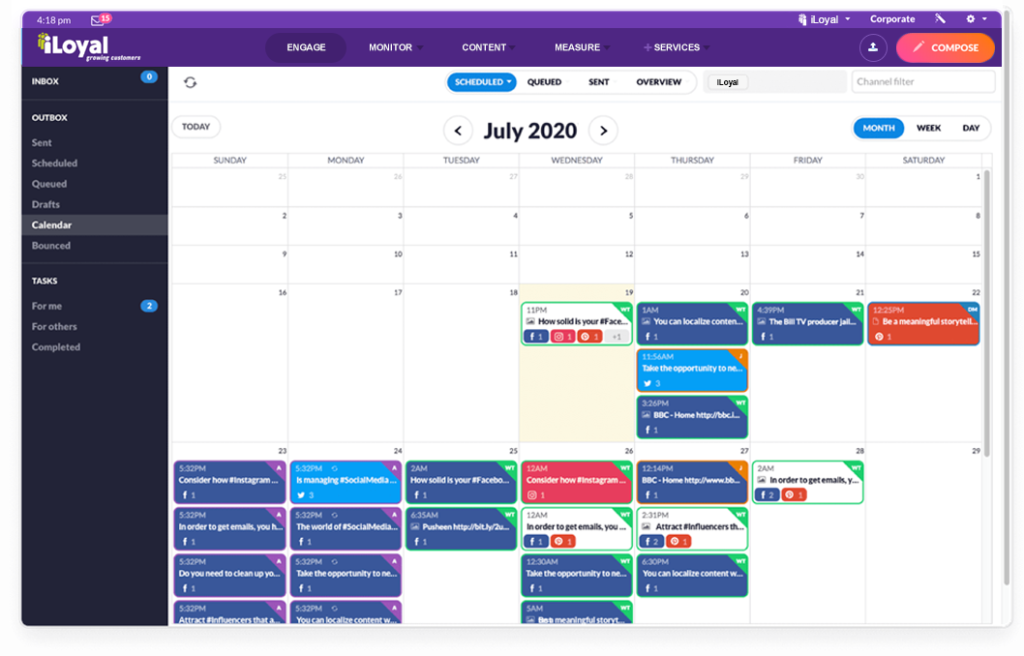
Post regularly and post at the right time. When is that, exactly? It’s when your audience is online and active. Make sure to double-check your analytics and adjust accordingly. Use a social media management tool, such as iLoyal Social Genius, to help you narrow down the best days and times to post.
Post consistently to establish and maintain a presence. But remember, when it comes to organic social media, quality always trumps quantity. This is why creating a good content strategy and social media content schedule is so important.
Planning ahead keeps the routine sustainable and prevents burn-out. Think long-term. Develop content themes, regular installments, or a recurring series.